Understanding success rates in IVF can be complicated and unclear. In full transparency, we proudly present the success rates for the entirety of 2022 to 2024 with no exclusions whatsoever.
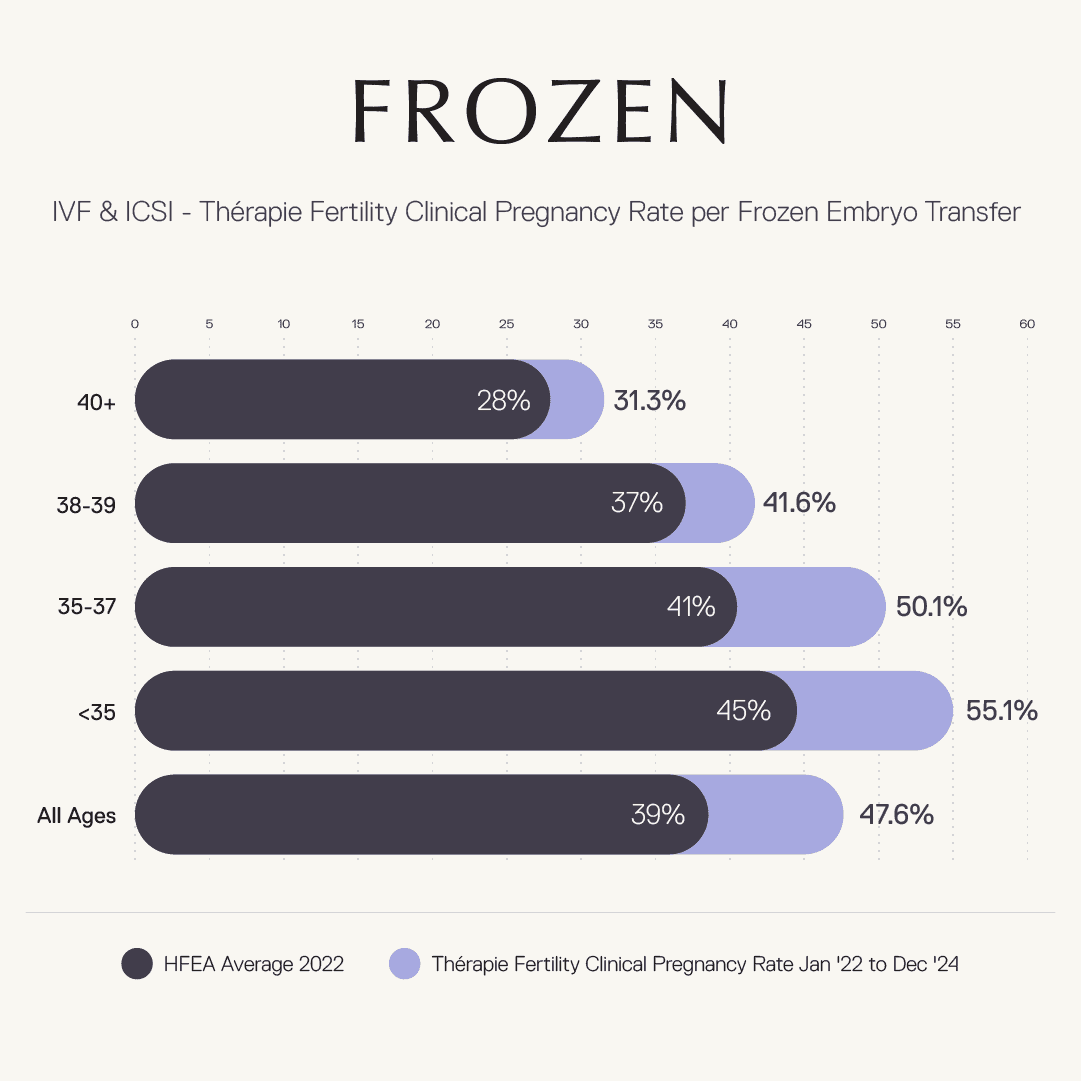
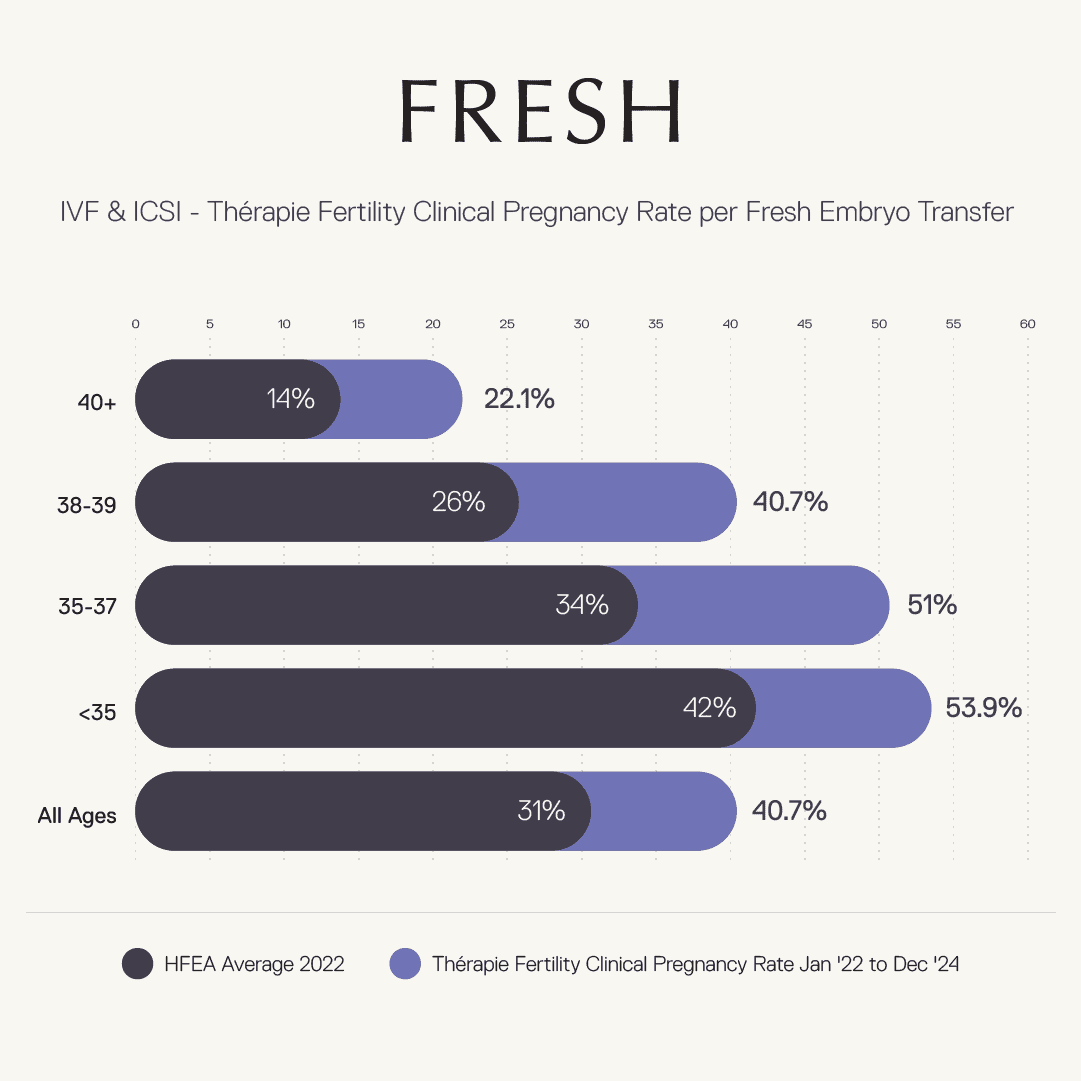
Our clinical pregnancies reported here are a direct comparison to the latest data from the HFEA. This is important as we do not exclude any embryo transfer outcomes, and the data presented includes all patients regardless of clinical diagnosis, (PCOS, endometriosis, diminished ovarian reserve) and semen quality (fresh ejaculate, frozen TESE sperm etc.)
Be mindful when comparing success rates to other clinics that they may remove subsets of patients or present a particular short period of time in their results (less than 1 year). Other factors are the definition of a pregnancy. Some clinics measure a positive outcome as a positive pregnancy test by urine or blood, rather than a clinical pregnancy determined by ultrasound at 7-8 weeks. That may give a falsely high impression of outcomes.
Our success rates are split by age group and fresh and frozen embryo transfers. It's clear to see that with increased maternal age, success rates decrease, however, we are very proud that all our success rates far exceed the HFEA average, across the board.
We are also incredibly proud of our outstanding Reciprocal IVF pregnancy rates for same sex female couples, which are 59.5% clinical pregnancy (FHB) per embryo transferred.
Our 2024 multiple pregnancy rate is 3.4% which is considered safe practice and in line with the HFEA latest dataset also. Multiple birth is the single biggest risk to the health and welfare of children born after IVF and can be reduced by transferring one embryo at a time to those most at risk of having twins.
Human Fertilisation and Embryology Authority. 2023.
Human Fertilisation and Embryology Authority Dashboard. Accessed on [2025-04-17].